


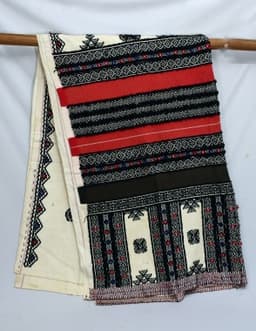
People in India use different costumes based on climate, region, occasion, or availability. IGRMS has collected costumes for all age and sex groups, along with embroidered, dyed, printed, and handwoven textiles like Kantha, Kalamkari, Pichhvais, Alizarine, Phulkari, and Chikankari, preserving their social, ritual, and cultural significance across communities.
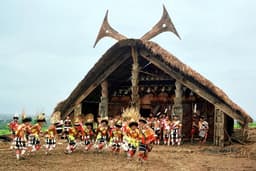
Widely available rock art at IGRMS, including shelters from Prempura Hill and Regional College, depicts prehistoric humans, animals, hunting, rituals, and seasonal activities. These Mesolithic and Chalcolithic paintings reflect ancient cultural traditions, anthropological significance, and human evolution. Despite weathering, they preserve social, ritual, and artistic expressions, offering insights into India's prehistoric societies.
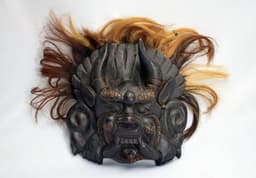
Games and amusements play an important role in people's lives, varying by region, occasion, age, sex, and community. IGRMS has collected objects from traditional and contemporary amusements, including masks, toys, puppets, dices, tops, leather puppets, and dolls, highlighting their social, cultural, and religious significance across communities in India.
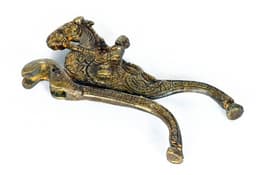
The use of tobacco, alcohol, and other narcotics serves as leisure for some communities and as essential elements in ritual ceremonies. In tribal India, offering these to guests is a mark of respect. IGRMS has collected tobacco pouches, lime and betel containers, areca nut crackers, chilams, pipes, hookahs, alcohol containers, and serving ladles.
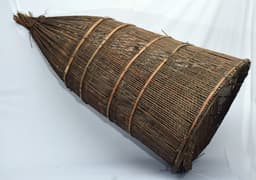
In India, fishing is a vital livelihood for many tribal and rural communities. Several groups depend on fishing as their main occupation, selling fish in markets, and are known as fishermen. Others practice fishing as a secondary activity or recreation. Rivers, canals, ponds, dams, and seas are used, with varied implements collected by IGRMS nationwide implement collections.
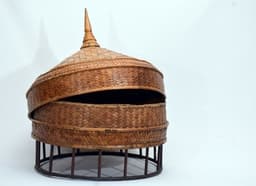
Basketry is the art of interlacing warp and weft to create functional objects, unlike felted items. Major forms include coiled, plaited, and twined basketry. IGRMS has collected baskets with lids, carrying, fish, shallow, and bamboo types from several Indian states, used by tribes like Khasi, Bhil, Warli, Baiga, and others for daily purposes.
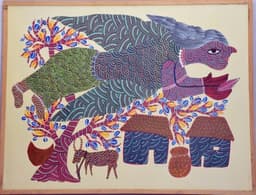
Art and craft support livelihoods, yet their deeper role appears in life events like birth, initiation, marriage, death, and seasonal festivals. Objects such as terracotta, paintings, and wooden or metal forms shape socio-religious life of village and tribal India. IGRMS presents creative works in terracotta, wood, grass, shells, iron, bell metal, and paintings extra detail.
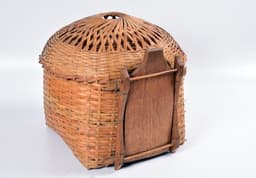
Animal husbandry implements at IGRMS come from Gujarat, Madhya Pradesh, Rajasthan, and Tamil Nadu, used by Rabari, Lohar, Birhor, and Gond groups. The collection features camel decorations, copper and brass bells, bark and white ropes, feeding troughs, buffalo ornaments, nose tops, and camel seat art, showing age old rural life and local skills across cultural landscapes.
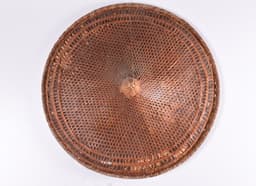
IGRMS showcases diverse agricultural implements from Meghalaya, Assam, Orissa, Uttar Pradesh, Gujarat, Rajasthan, Andhra Pradesh, and Tamil Nadu. Tools include sickle, hoe cum spade, plough with yoke, digging stick, spade, straw separating stick, and seed funnel. Collected from Korku, Gaddi, Warli, Jounsari, Agaria, Lepcha, Rabari, Bondo, and Kota tribes, they highlight India's farming heritage.
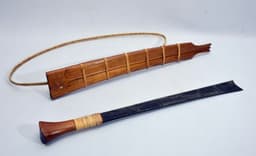
GRMS houses weapons used for offence or defence by tribal and non tribal communities. The collection includes iron knives, spears, bent bladed tools, knives, battle axes, and iron shields. Most items are from Muria, Saora, Toda, Bondo, Kota, and Gadaba tribes of Madhya Pradesh, Chhattisgarh, Orissa, Assam, Tamil Nadu, Andhra Pradesh, Kerala, Bihar, and Manipur.
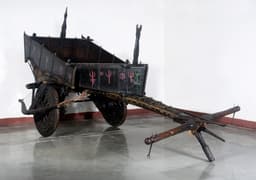
IGRMS has collected different means of Travel and Transport used in tribal and folk societies of India. Some of these traditional means of transportations are still used in the rural areas. The IGRMS has collected such kind of traditional transporting instruments from different parts of the country which includes bullock carts, boats, floating instrument, palanquin etc.
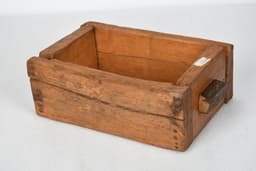
Tools are used for domestic purposes. IGRMS has collected hammer, iron tongs, spade, chisel, matchlock, wood chopper, anvil, fire device, toddy tapper, oil crusher, adze, axe, rope weaver, mango cutter, sugarcane crusher, iron forceps, bamboo splitter, and knives from Maharashtra, Uttar Pradesh, Madhya Pradesh, Assam, Tamil Nadu.
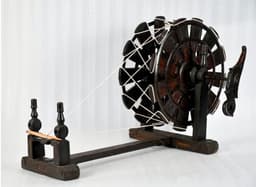
Spinning makes yarn from fiber by twisting and lengthening, while weaving produces cloth or cordage. Softer, narrower materials than basketry are worked on a loom by interlacing two series of pliable elements at right angles. IGRMS has collected looms, accessories, wooden weaving tools, spinning wheels, spindles, and articles from Manipur, Uttar Pradesh, Orissa, Assam, Rajasthan, and Madhya Pradesh.
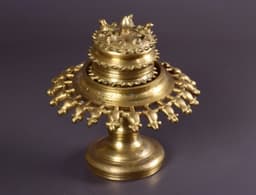
Study and documentation of any community is not possible without understanding their beliefs. Every individual believes in some supernatural power. Societies, whether nature or idol worshipers, require ritual articles. IGRMS has collected objects related to worship, magical practices, offerings, and rituals, including idols, statues, images, and other objects of ritual importance.
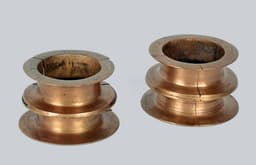
Among India's folk and tribal communities, jewelry is believed to protect the wearer from evil spirits and is not merely adornment. This collection shows the diversity of materials lac, glass, shells, grass, threads, beads, feathers, bones, silver, copper, bronze and traditions of wearing. IGRMS has a fine collection of ornaments from different regions of the country.
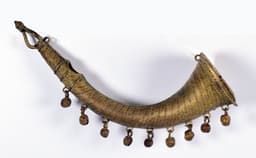
IGRMS has a large collection of musical instruments, categorized by typology, shape, size, and use into four groups: percussion, string, wind, and clapper. Percussion includes single and double membrane drums and tambourines; string includes violin, sitar, and musical bows; wind includes flutes, whistles, pipes, and bugles; clapper includes cymbals, gongs, and bells.
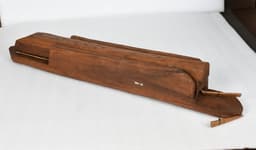
IGRMS has collected many hunting implements from different communities and regions. Important items include nets, traps, bows and arrows, gum sticks, spears, and cages. These objects were collected by IGRMS officials from various parts of the country, representing traditional hunting techniques and tools used by diverse tribal and folk groups across India.
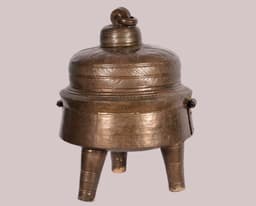
Household articles are common in every family and culture, strongly related to food and daily life. IGRMS has collected utensils, plates, glasses, pitchers, grinders, mats, containers, brooms, lamps, and more from across India. These are made of clay, wood, brass, leaves, and metals, representing traditional household practices and daily living of diverse communities.
People in India use different costumes based on climate, region, occasion, or availability. IGRMS has collected costumes for all age and sex groups, along with embroidered, dyed, printed, and handwoven textiles like Kantha, Kalamkari, Pichhvais, Alizarine, Phulkari, and Chikankari, preserving their social, ritual, and cultural significance across communities.
Widely available rock art at IGRMS, including shelters from Prempura Hill and Regional College, depicts prehistoric humans, animals, hunting, rituals, and seasonal activities. These Mesolithic and Chalcolithic paintings reflect ancient cultural traditions, anthropological significance, and human evolution. Despite weathering, they preserve social, ritual, and artistic expressions, offering insights into India's prehistoric societies.
Games and amusements play an important role in people's lives, varying by region, occasion, age, sex, and community. IGRMS has collected objects from traditional and contemporary amusements, including masks, toys, puppets, dices, tops, leather puppets, and dolls, highlighting their social, cultural, and religious significance across communities in India.
The use of tobacco, alcohol, and other narcotics serves as leisure for some communities and as essential elements in ritual ceremonies. In tribal India, offering these to guests is a mark of respect. IGRMS has collected tobacco pouches, lime and betel containers, areca nut crackers, chilams, pipes, hookahs, alcohol containers, and serving ladles.
In India, fishing is a vital livelihood for many tribal and rural communities. Several groups depend on fishing as their main occupation, selling fish in markets, and are known as fishermen. Others practice fishing as a secondary activity or recreation. Rivers, canals, ponds, dams, and seas are used, with varied implements collected by IGRMS nationwide implement collections.
Basketry is the art of interlacing warp and weft to create functional objects, unlike felted items. Major forms include coiled, plaited, and twined basketry. IGRMS has collected baskets with lids, carrying, fish, shallow, and bamboo types from several Indian states, used by tribes like Khasi, Bhil, Warli, Baiga, and others for daily purposes.
Art and craft support livelihoods, yet their deeper role appears in life events like birth, initiation, marriage, death, and seasonal festivals. Objects such as terracotta, paintings, and wooden or metal forms shape socio-religious life of village and tribal India. IGRMS presents creative works in terracotta, wood, grass, shells, iron, bell metal, and paintings extra detail.
Animal husbandry implements at IGRMS come from Gujarat, Madhya Pradesh, Rajasthan, and Tamil Nadu, used by Rabari, Lohar, Birhor, and Gond groups. The collection features camel decorations, copper and brass bells, bark and white ropes, feeding troughs, buffalo ornaments, nose tops, and camel seat art, showing age old rural life and local skills across cultural landscapes.
